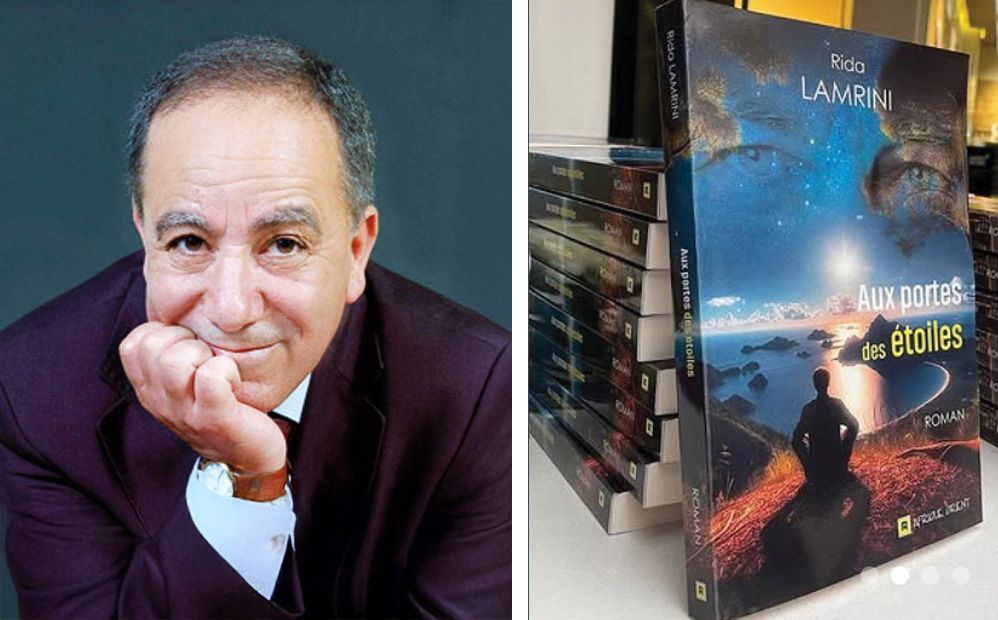
Cover of As Long as I Can Tell You I Love You

Volume One of the Romanesque Saga

As Long as I Can Tell You I Love You

"With 'As Long as I Can Tell You I Love You', I tackle subjects that touch human intimacy... Personally, I consider this novel as the work of my life."
Read an excerpt

A novel of wounds and rediscovered voice

First volume of a major romanesque saga, As Long as I Can Tell You I Love You unfolds a sensitive meditation on love, time, memory, and the tremors of the contemporary world.

"With 'As Long as I Can Tell You I Love You', I tackle subjects that touch human intimacy... Personally, I consider this novel as the work of my life."

— Rida Lamrini

Presentation Note

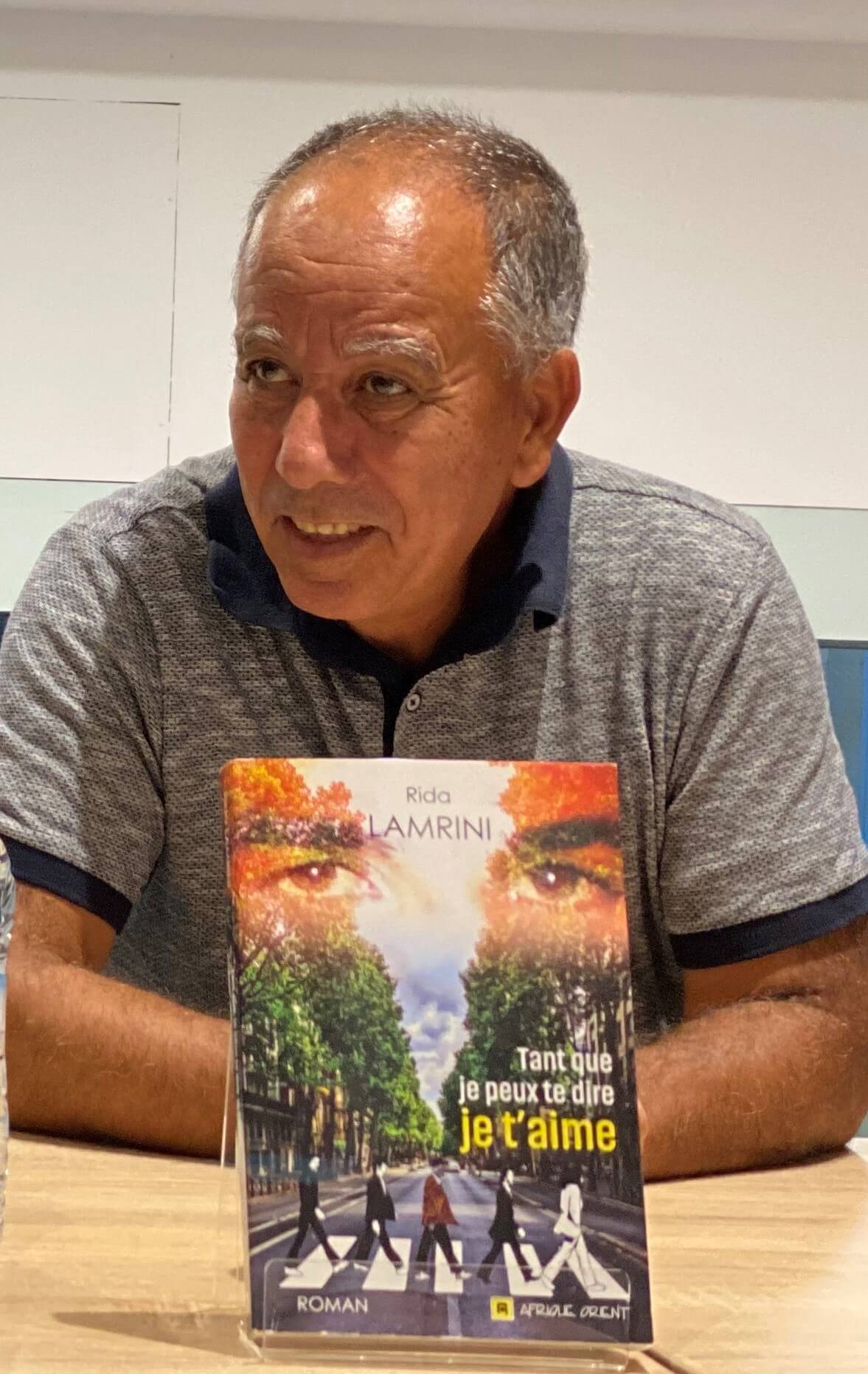
Rida Lamrini with his novel

As Long as I Can Tell You I Love You opens a vast, sensitive, and deeply human romanesque saga, where the intimate constantly clashes with the tremors of the world. Through Rayan, a man who has reached the age of reckoning, Rida Lamrini explores that tipping point where love, time, desire, the memory of old choices, and the wear of long loyalties force a person to finally look at themselves without detour. Across Casablanca, Kuala Lumpur, Moscow, Paris, and northern Morocco, the novel unfolds a sensitive geography where external movements mirror internal fractures, while lives cross, seek each other, miss each other, and History, geopolitical tensions, social fractures, and contemporary disillusionment pass through the most private destinies.

Carried by a rich, inhabited, and intensely embodied writing, this first volume composes much more than a love story. It questions the fragility of the couple, the vertigo of loss, the temptation of beginning again, the vulnerability of ties, but also the way in which political, social, and moral upheavals reach the most personal existences. Through several figures — Rayan, Camélia, Carla, Dina, Samia — Rida Lamrini unfolds a dense romanesque material, inhabited by the great questions of love, regret, loyalty, and self-reconquest.

A novel of passion and doubt, of attachment and hope, As Long as I Can Tell You I Love You inaugurates a long-term, ambitious, and deeply human work. It is a saga about beings, their wounds, their impulses, and about what remains of them when loving becomes both a promise, a struggle, and a memory.

Themes

What the novel explores

Intimate Conflict

Rayan and Salim

The central tension lies in misunderstanding and distance. A father-son relationship crossed by wounds, distance, the quest, and the ultimate possibility of reuniting.

The Moral Stake

Love and Forgiveness

Beyond the trauma, this book poses the vertiginous question of family forgiveness and the words that must be said before it is too late.

Romanesque Saga

Its place in the work

As Long as I Can Tell You I Love You constitutes the emotional core, the starting point of a three-part romanesque saga.

It strips bare the family history and lays the foundations of the quest that will continue in At the Gates of the Stars and Meanders of Oblivion. While subsequent volumes broaden into mystery or thriller, this first book remains resolutely anchored in intimate drama, setting the tone and moral stake of the entire work.

Discover the full Library

Poetic Fragment

The calm is barely disturbed by the croaking of tree frogs in search of gallant company. The color of the sky hesitates between night blue and purple. The stars, shy, light up, decorating the celestial vault. A shooting star tears through the cosmic harmony, zebras the firmament with an evanescent light. The waves, released by the surf on the nearby shore, come to die in the silence of the night. Souls blend, bodies marry, heaven and earth touch in the magnificence of the evening.
Intoxicated, Camélia and Rayan go to bed. A dim light enters through the bay window, nimbusing the room with a velvety aura. The soft atmosphere, the dimmed light, the softness of the sheets, the lack of love, fingers touching, hands caressing, caresses that warm, heat that radiates, drunkenness that dizzies, bodies that wind, souls that seek each other, desires that kindle, fever that burns, spirits that blur, passion that blinds, desire that rises, intimacies that fuse, bodies that become one…
…And love becomes king, perhaps for the last time.

Literary Analysis

Reader's View

A novel of intimate wounds, family silence, and rediscovered voice.

As Long as I Can Tell You I Love You is a novel of the intimate, of wounds, and of rediscovered voice. Through the relationship between Rayan and Salim, father and son marked by a painful past, Rida Lamrini accurately explores family silences, trauma, the difficulty of loving, and the desire for reparation.

With this book, the author immediately places his novel on demanding ground: that of the relationship between a father and his son, when love remains, but is crossed by wounds, silences, and misunderstandings accumulated over the years.

The novel seeks neither easy effect nor forced emotion. It moves as close as possible to intimate fragilities, to what breaks in childhood and continues to produce its effects long after. It thus touches on something deeply universal: the difficulty of loving those who are closest to us, and even more of saying to them what has not been said.

The strength of the book lies in this constant tension between pain and the desire for reparation. Rayan and Salim do not appear only as two characters, but as the two poles of the same interior drama: that of transmission, misunderstanding, the weight of the past, and the possibility, despite everything, of reconnecting.

To this intimate material is added a discreet but persistent reflection on writing itself. In this novel, writing is not a simple literary gesture: it is an attempt to understand, to transmit, to save something that would otherwise risk being lost.

As Long as I Can Tell You I Love You is thus a grave, sensitive, and masterfully controlled novel, which lays the foundations of a vaster saga while finding within itself its full human necessity.

Contact

Let's stay in touch: news, encounters, and exchanges

Leave your e-mail and, if you wish, your phone number and a message. You can be contacted, receive news about my books and site, be informed of publications, meetings, and signing sessions, as well as interviews, TV and radio appearances, and various appointments around my work.

E-Mail
auteur@rida-lamrini.com